
The Greek Revival Style British Museum Building
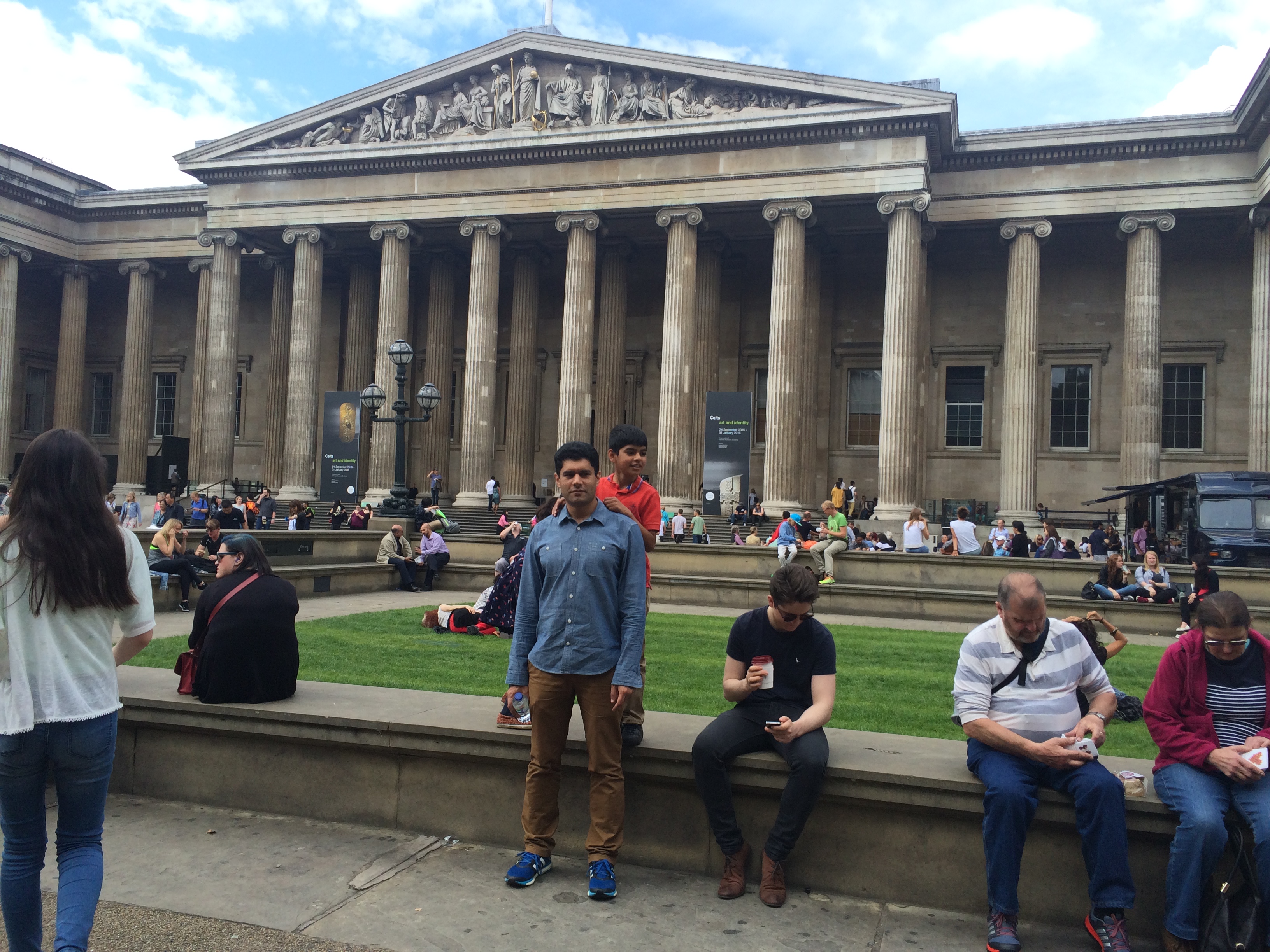
As a family, we have been to the British Museum several times. Although I found the museum artefacts to be very interesting, I was also fascinated by the actual buildings that make up the museum.
The buildings that make up the museum include the four main wings, the round Reading Room and the Great Court that was designed by Norman Foster.
In this blog post I am going to focus on the main building that people see as they enter the British Museum from the south entrance. When I first saw the building I thought it may have been built by the Romans or Greeks themselves more than a millennium ago. The main building was actually completed in 1852.
The reason why it looks like an ancient Greek building is because Sir Robert Smirke, who designed the building, designed it in the Greek Revival style.
In the late 18th and early 19th centuries many architects designed buildings that looked like they had been built by ancient Greeks. This style of designing buildings was called the Greek Revival. Other examples of this are Thomas Hamilton’s design for the Royal High School and the Brandenburg Gate in Berlin, Germany. I don’t know much about these other buildings, but I might try to get my parents to take me there if possible.
The British Museum building was built in the 1820s by constructing a frame made from cast iron on a concrete floor. The frame was filled with London stock brick and the part of the building that faced the public was covered in Portland Stone.
The building is very impressive to look at and certainly has a Greek feel to it.
In future blog posts I will write about the other buildings that make up the British Museum and about some of the exhibitions and artefacts that it contains.
Recent Comments